
SOUTH EAST
South Downs
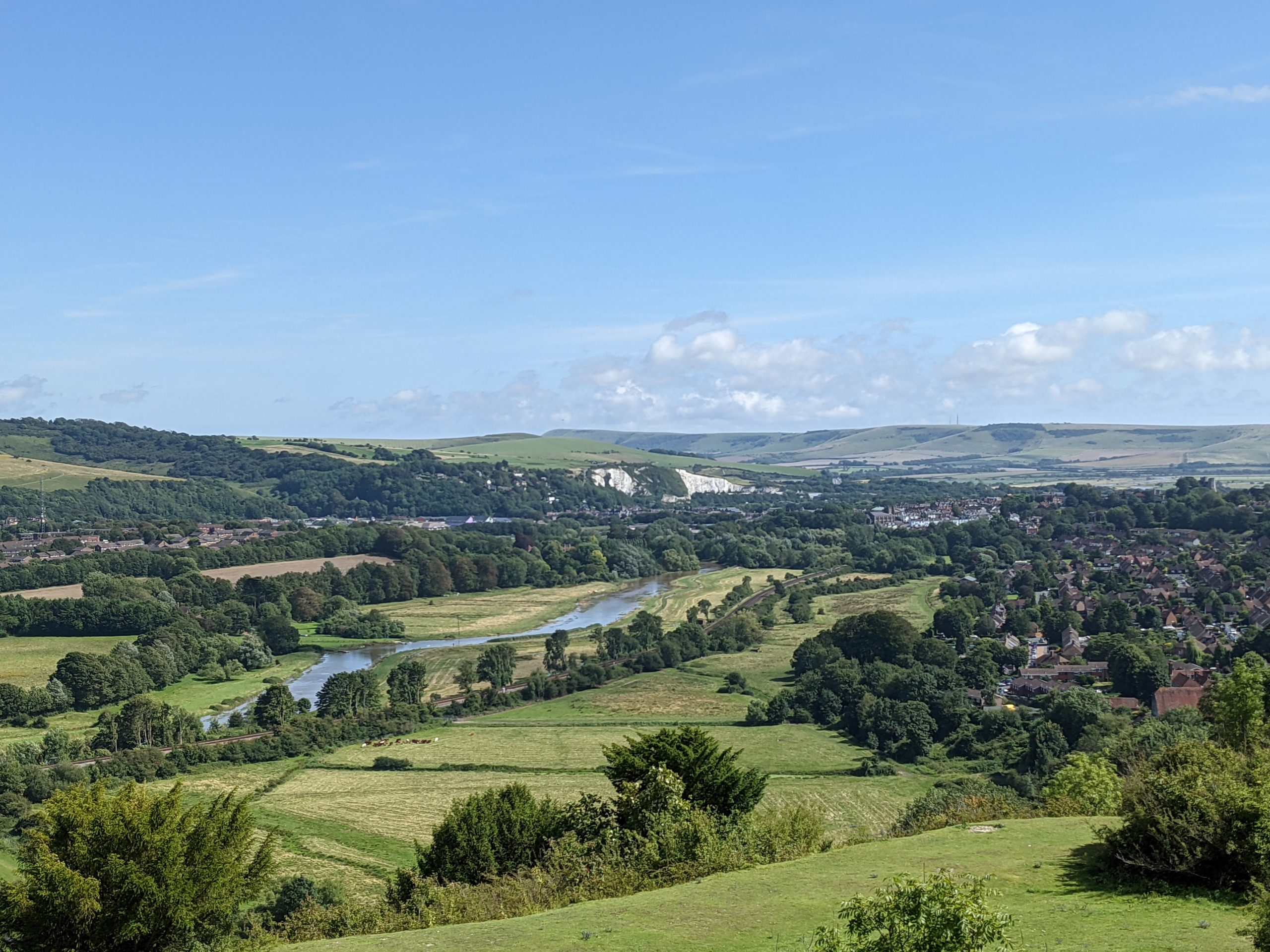
The South Downs stretch across Hampshire, West Sussex and East Sussex, bringing together chalk hills, wooded valleys, rivers and the white cliffs of the Sussex coast. Designated as a National Park in 2010, the protected landscape covers more than 1,600 square kilometres and runs from Winchester in the west to Eastbourne on the coast.
Choose a short nature walk, a viewpoint with room to pause or a section of the South Downs Way. The 100-mile National Trail is only one way to experience the area: many visits centre on a shorter route, a riverside path, ancient woodland, heathland or chalk grassland. A visit works best when you pick one area for the day rather than trying to cover the entire National Park.

South Downs at a glance
Where
Hampshire · West Sussex · East Sussex, stretching from Winchester to Eastbourne and including inland downs, river valleys and coastal cliffs.
Your visit
Choose a short outing, a viewpoint stop or a longer walk. The South Downs Way is the best-known route, but local paths and official access routes give plenty of options for shorter visits.
Before you arrive
Check current opening times, route conditions, local notices and weather before travelling. Facilities vary by village, car park and visitor site, so confirm parking, toilets and transport for the exact place you plan to start.
Why visit South Downs?
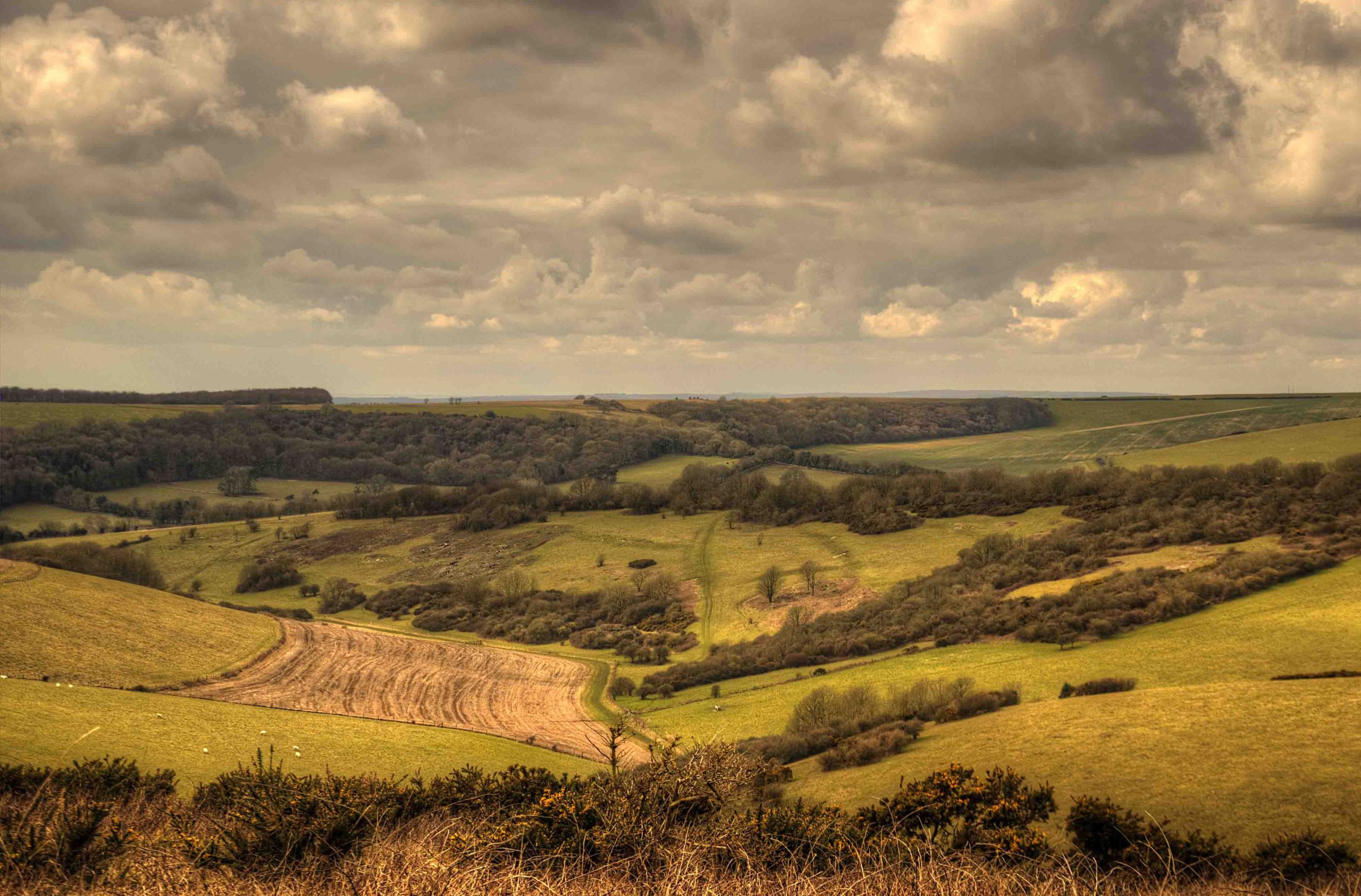
The park offers much more than its famous skyline. In Hampshire, wooded hills and chalk streams give a different experience from the open Sussex downland. West Sussex adds heaths, river valleys and ancient woods; the eastern coast brings estuary birds and sea views.
That variety makes repeat visits rewarding. You can plan around a particular habitat, a season or your walking ability, then use a village or visitor centre as a base. Leave time to stop and look: a patch of flowers beside the path can be as interesting as a distant panorama.

Walks and places to explore
Try a section of the South Downs Way
The National Trail runs for about 100 miles between Winchester and Eastbourne. You do not need to tackle it end to end: choose a manageable section with a clear return route, or use public transport for a linear walk. Ridgeline routes can involve repeated climbs and exposed stretches, so check the official route details and forecast before committing.
Choose a Miles without Stiles route
The National Park’s Miles without Stiles guides offer gentler options across the Downs. Each guide describes the surface, gradient, facilities and transport rather than relying on a single accessibility label. Use those details to choose a walk that suits your group, and allow extra time after wet weather.
Explore the coast or ancient woodland
Seven Sisters offers an estuary and coastal landscape; Kingley Vale offers veteran yew woodland in West Sussex. These are separate destinations within the park, each with its own parking, facilities and access considerations. Consult their visitor guides before choosing your starting point.
Accessibility and easier visits
Accessibility varies greatly across a National Park this large. A hilltop path, woodland trail and riverside route may have very different gradients and surfaces. The official accessibility hub and individual Miles without Stiles guides are the best starting points for planning.
Check the complete journey from parking or bus stop to the path, including gates, benches and toilets. If you need equipment hire or a particular facility, contact the relevant destination before travelling rather than assuming it is available throughout the park.
Plan your visit
Getting there
There is no single entrance. Choose your destination first, then use the official visitor map to identify nearby stations, bus stops and walking routes. Winchester and Eastbourne mark the ends of the South Downs Way, but a rail journey to another gateway can suit a shorter day. Check current services and the walk from your stop.
Parking and cost
Use designated car parks at your chosen starting point. Charges, payment methods, height barriers and closing times belong to each operator and vary across the park. Arrive with a second suitable destination in mind if a small rural car park is full; keep verges, gateways and emergency access clear.
Opening and admission
The National Park has no single opening timetable or entrance ticket. Access depends on public rights of way, access land and individual attractions. Visitor centres, cafés, toilets and car parks keep their own hours; check the destination you intend to use.
Toilets and refreshments
Facilities are concentrated at villages, visitor centres and larger attractions. Do not assume a ridgeline walk has a toilet, shop or drinking-water point. Bring water and food, check the nearest toilet before setting off, and plan a sheltered stopping point where possible.
Dogs and responsible visits
Responsible dog walkers are welcome. Keep dogs on leads near livestock and follow all local lead notices. Stay on paths to protect ground-nesting birds, especially during the National Park’s highlighted period of 1 March to 15 September. Bag and bin waste, and avoid military training areas when red flags are flying.
Wildlife and changing seasons
Spring and summer
Flower-rich chalk grassland can support orchids, skylarks and butterflies such as chalkhill blues. Heathland and woodland have different wildlife, so match your visit to the habitat rather than expecting every species at every viewpoint. Watch from the path without trampling flowers.
Autumn and winter
Woodland, rivers and coastal habitats give alternatives when the downland is windy. Look for birds and seasonal changes in the landscape, while remembering that wildlife sightings are never guaranteed. A shorter visit with several quiet pauses can be more satisfying than a long, hurried walk.
Make the most of your day
Wear footwear suited to chalk, mud and uneven paths. Exposed hills can feel much colder than nearby towns, and coastal cliffs require a generous distance from the edge. Follow the Countryside Code, leave gates as found and take litter home. Wild camping is not permitted without the landowner’s permission.
Explore more nearby
Official visitor information
South Downs official visitor map · South Downs Way · Miles without Stiles · Wildlife across the park · Dog walking guidance · Visiting safely
Visitor details checked 5 October 2026. Opening times, charges and access can change; check the official sources before travelling.